Your Readers Don’t Know What You Know
Here’s a writing problem nobody talks about and few even think about.
Authors know too much about their own books.
If you doubt it, think about your own book. Why does the villain hate the hero? What happened twenty years before chapter one? How did the current king overthrow his predecessor without spilling one drop of blood?

You know all the answers.
The reader, in contrast, knows none of them.
That knowledge gap causes one of the most common yet little-known problems I find in new authors’ books.
They write stories that make perfect sense to them. But they only give the reader half the information that’s needed to understand it.
Suppose your protagonist, let’s call him Mark, has been avoiding his older brother for the last hundred pages. He won’t answer his calls. His brother shows up to a party, and Mark leaves without a word. When a mutual friend suggests they bury the hatchet, Mark brusquely changes the subject.
Of course, you know exactly why: Five years ago, Mark’s brother caused the car crash that killed their father.
The problem is, you don’t inform the reader of that fact for another fifty pages.
From your point of view, Mark’s behavior has been consistent since page one. But from the reader’s perspective, Mark has been shunning his brother for no apparent reason.
So when you lay all the cards on the table, expecting the reader to have a “surprising yet inevitable” epiphany, what the reader thinks is …
Why didn’t he tell me that before?
That’s the kind of problem I look for when providing author clients with my professional editing services.
Read the full post on Substack.
GIVE READERS A STORY WORTH KEEPING
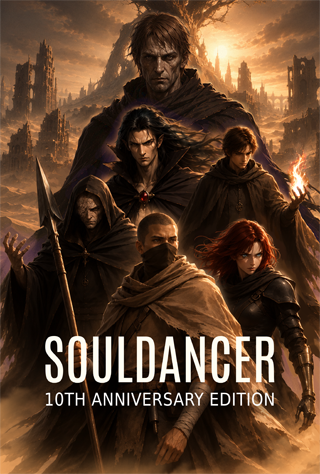
The Souldancer 10th Anniversary Campaign celebrates my Dragon Award-winning novel with a definitive anniversary hardcover. And it brings readers a brand-new Soul Cycle novella, The Other Side of Fear.
Add the special edition to your bookcase, and support independent fiction. Back the campaign on Kickstarter.