Self-deprecating remarks about your writing is costing you readers.

Picture walking into a restaurant and asking the owner what he’d recommend. He tells you the steak is too tough, and the chicken is rubbery. Honestly, he’s surprised anyone would pay to eat there.
Would you ask for a table?
Probably not.
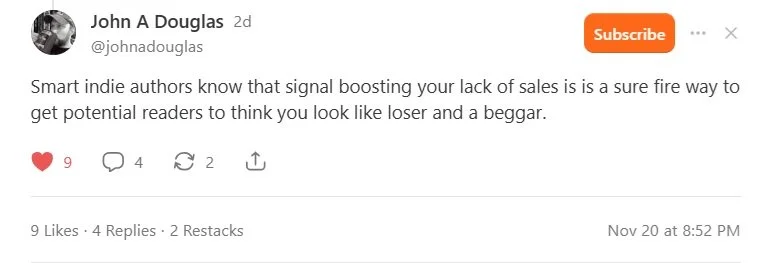
Yet I regularly see independent authors deriding their own books. They apologize for their writing, publicly expressing bewilderment that anyone would read their novels. Some even describe their books as trash.
Most of these authors are trying to come across as humble, approachable, and relatable.
Unfortunately, to prospective readers, they’re making a compelling argument for taking their business elsewhere.
Ditch the false modesty
Authors are acutely aware of our shortcomings. The scenes that fought us and the dialogue that still makes us cringe after six rewrites are burned into our minds.
But looking through that microscope can give a distorted impression of the whole work.
And social media compounds that myopia. Post a self-deprecating take, and you’ll get flooded with sympathetic replies from fellow writers. The resulting dopamine hits risk making a habit of false modesty.
What too many authors forget is that you’re not on social media to get validation from other writers. You’re there to market yourself to readers.
And every time you publicly disparage your writing, you give prospective readers another reason to pass on it.
📚 First, a word on Nethereal
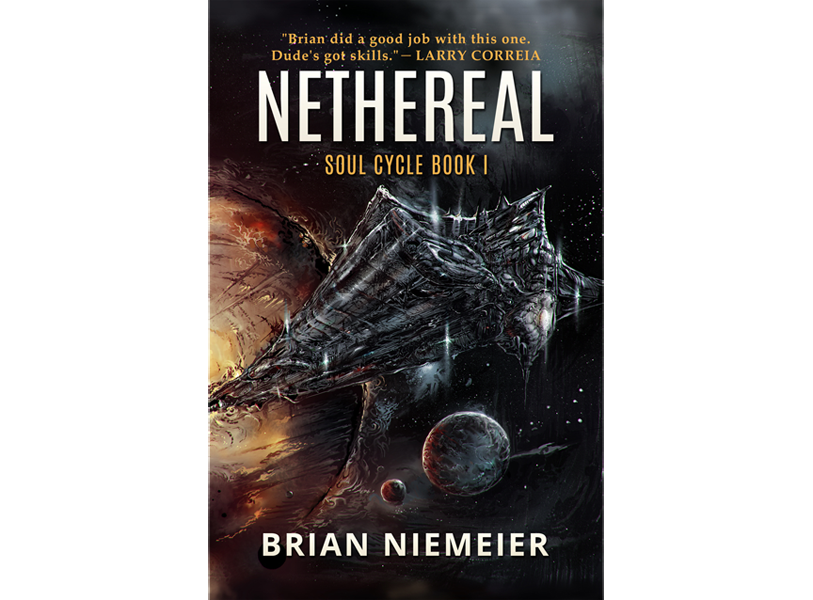
What happens when the cast of Firefly hijacks a prototype ship bound for Hell?
Nethereal, my Campbell-nominated debut novel, launched the Soul Cycle: a horror-adventure saga of cosmic warfare ignited by forbidden knowledge.
If you enjoy dark fantasy, cosmic horror, and stories with not just worlds, but countless souls at stake, I’ve got a whole cosmos waiting for you.
Readers are already on your side
One of the most liberating realizations authors can have is the epiphany that most readers want to like their books.
Think about your own reading habits. When you pick up a new novel, you’re hoping for memorable characters, fascinating worlds, and captivating adventure.
You bought the book expecting it’s good. And you want the author to be a new favorite whose books will keep you entertained for years to come.
Exactly no one deliberately pays to be disappointed.
The readers who give your book a chance are looking for the kinds of stories you’ve devoted months to writing and weeks to selling.
Why would you discourage them?
Put it this way: If someone searching for a good story hands you a chance to show that he’s found the pot of gold at the end of the rainbow, why would you talk him out of it?
At the end of the day, squandering that opportunity by fishing for reassurances of your writing abilities serves no one.