When should you hire an editor? When should you seek beta readers? Here's the process I recommend for turning your first draft into a publication-ready novel.
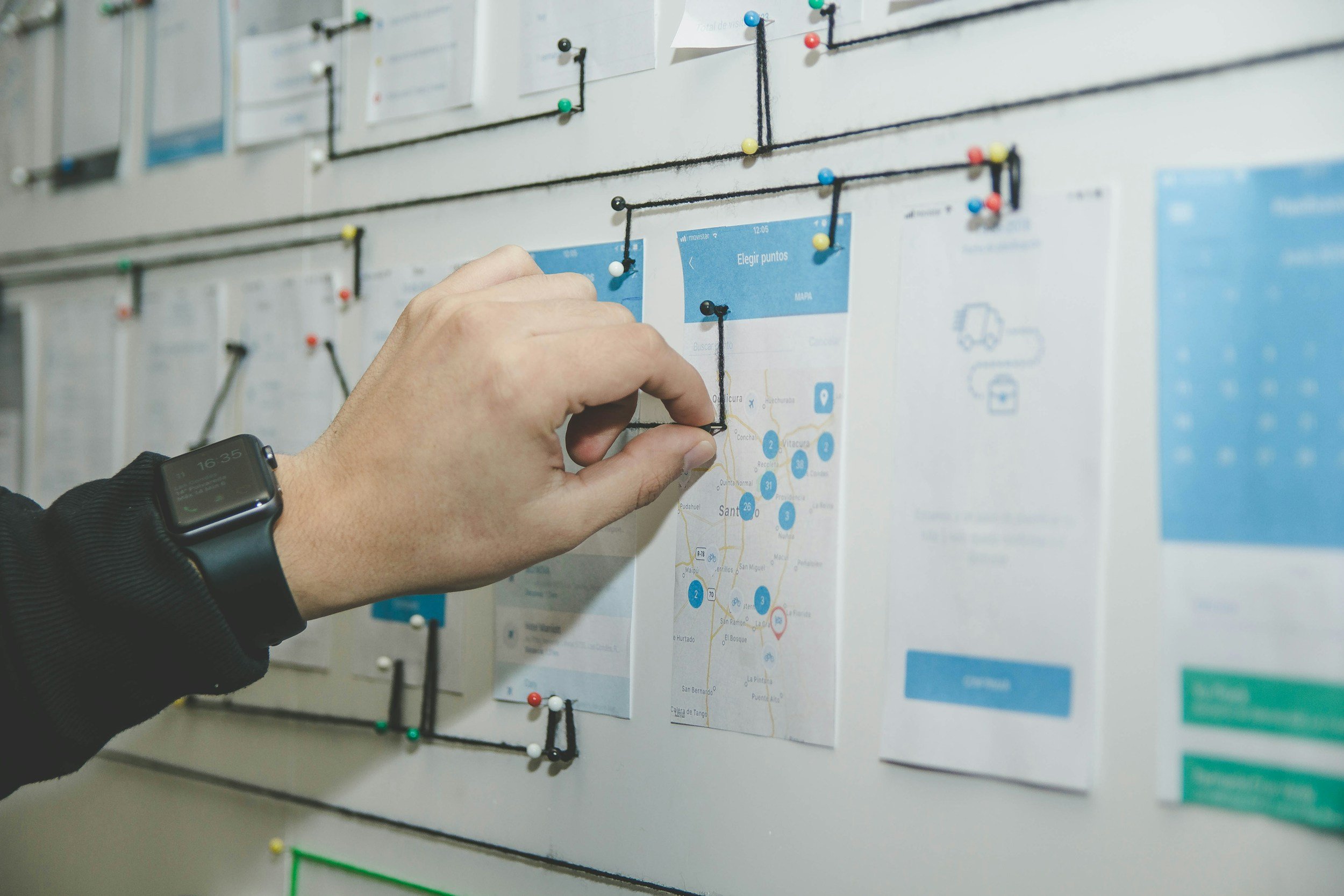
Many independent authors make one of their most expensive mistakes long before they publish their books.
They prewrite, draft, get feedback, and revise in the wrong order (sometimes missing vital steps).

Does the following sound familiar?
After months of writing, you finally finish your first draft. Knowing it’s not perfect, you immediately send it to an editor.
And you get back a list of suggested fixes as long as your arm, along with a bill that’s considerably bigger than it had to be.
Because many of those problems could have been avoided or fixed before you spent a dime.
Having edited professionally for more than a decade, I’ve seen how easily authors can waste precious time and money by tackling the publishing process out of order.
The secret to getting the most bang for your buck and time is knowing when to brainstorm, outline, draft, get feedback, revise, and bring in an editor.
Luckily, I’ve got the answers for you. Here’s the ten-step workflow I recommend.
🎧 First, a word on Nethereal
The Nethereal audiobook continues with Episode 3, featuring Wes Thompson’s narration of my Campbell Award-finalist debut novel.
Follow the unfolding voyage into dark mystery in this epic saga of cosmic horror, forbidden worlds, and supernatural warfare.
Listen to Nethereal Episode 3 on YouTube👇
Phase 1: Build the story
Step 1 - Brainstorm your ideas
Every novel starts as an idea. It could be a character, a setting, an intriguing conflict, or even a single scene.
Think about that element, and write down every detail that comes to mind. don’t fret over whether or not all of it belongs in the book. At this stage, you’re gathering raw material.
Keep a look out for the central conflict that will drive the story, the characters involved, and the stakes if your protagonist fails.
Once those elements start coalescing, you’re ready to organize them.
Step 2 - Outline
Your outline is the blueprint for your book. It needn’t describe every conversation or minor event. But you should know where the story begins, how its central conflict develops, and where it ends.
Pinpoint your major plot turns, pinches, and twists. And pay attention to chains of cause and effect. Each major development should follow logically from the last.
A good outline won’t eliminate every problem, but it can keep you from writing thousands of words that end up going nowhere.
And it’s the best way to keep the end from sucking.
Step 3 - Write the first draft
Now you actually write the book.
That means resisting perfectionism at every turn. You’ve got to give yourself permission to write suboptimally, even poorly, at this point.
Because your immediate objective is to produce a coherent manuscript (which is another compelling reason to outline).
Some scenes will be rough. Get over it. Certain characters may need more development. Work through it. You may even find that your planned ending just plain doesn’t work.
That is normal. Finish the draft before attempting any kind of revision. Composition and editing are two different operations that engage different parts of the brain (one creative; one analytical). Trying to do both at once won’t result in better prose but subpar writing and editing.
Phase 2: Be your own first editor
Step 4 - Let the draft rest
Once you’ve finished your first draft, pop the champagne and pat yourself on the back! You have achieved a feat that 80 percent of people aspire to but few accomplish.
Then set the MS aside for one to two weeks.
Fight the urge to tweak it. Don’t even read it.
Open up enough distance to return to the keyboard with a fresh perspective.
“But you said not to waste time!” I can hear some of you saying.
And the answer is, letting a pie cool on the windowsill is not a waste of time but a necessary part of baking it.
So it is with freshly drafted stories.
After writing, eating, breathing, and living the same story for months, you get accustomed to your own assumptions. You know what every character is thinking at all times and exactly why the smallest event occurs.
Unfortunately, readers don’t have access to that information unless you put it on the page.
Distancing yourself from the material for a while helps you see what is (and is not) actually in the book.
Step 5: Produce your second draft
Return to the MS and read it from start to finish. Look for big-picture structural problems before drilling down into individual paragraphs and sentences.
Are the characters’ motivations clear?
Does each scene advance the plot, reinforce, theme, or develop characters?
Do major revelations have enough foreshadowing?
Fix any inconsistencies, remove unnecessary sections, and make sure the transition between any two story beats can be described as “but” or “therefore” instead of “and then.”
Only then should you zoom in to correct awkward prose, repetition, and typos.
After this stage, your MS should be ready for outside readers.