Nolan's Odyssey Doesn't Prove What the Culture War Says It Proves
Christopher Nolan’s adaptation of The Odyssey has reignited a familiar argument.
Some commentators see its success as proof that Modern audiences are hungry for updates to problematic old tales. Others lament that normies have at last been so indoctrinated by Hollywood slop as to have forsaken the Western canon.
Like blind men groping an elephant; or more aptly in this case, marks buying into wrestling promos cut by the heel, both sides are misreading what the situation means. Because the root issue runs much deeper than one movie. And movies in general, for that matte.
Nearly a century ago, Edward Bernays argued that public opinion is far less spontaneous than most people imagine. In his most notorious book, Propaganda, he described modern society as being guided by what he famously called the “invisible government,” a relatively small group of institutions capable of directing public attention on a massive scale.
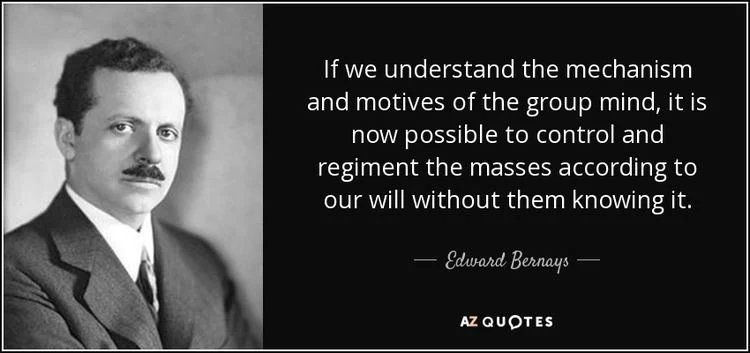
Whether one accepts Bernays’ conclusions or recoils from them, history has repeatedly demonstrated his central insight:
Public attention seldom distributes itself.
Which must mean, by process of elimination, that it is distributed.
Every newpub author dreams of getting a movie adaptation. But think about what it takes to launch a modern blockbuster. Let’s assume you somehow came up with the resources to turn your book into a major motion picture. Just to promote it, you would still need …
Read the full post on Substack.
Learn to reclaim your dignity and have fun while you’re at it.
